Pavel Vasilev
Investigation of Expert Specialization in Multimodal Diffusion Models
Authors: Pavel Vasilev, Daniil Tikhonov
Mentor: Gleb Molodtsov
Project: Yandex School of Data Analysis (YSDA)
1. Motivation & Problem Statement
Unified multimodal models often struggle because different tasks (e.g., text understanding vs. image generation) require fundamentally different “knowledge” and processing patterns. When all this knowledge is mixed in a single dense Feed-Forward Network (FFN), the model tries to satisfy all objectives simultaneously, often leading to suboptimal performance or “forgetting.”
Our Hypothesis:
By replacing dense FFNs with Mixture of Experts (MoE) layers, the model can autonomously “route” tokens to specialized experts. We hypothesized the model would separate knowledge based on:
- Token Type: Image tokens vs. Text tokens.
- Data Domain: Different underlying datasets.
2. Methodology
We experimented with the Show-o architecture (1.3B parameters), which unifies Autoregressive (text) and Masked Diffusion (image) modeling.
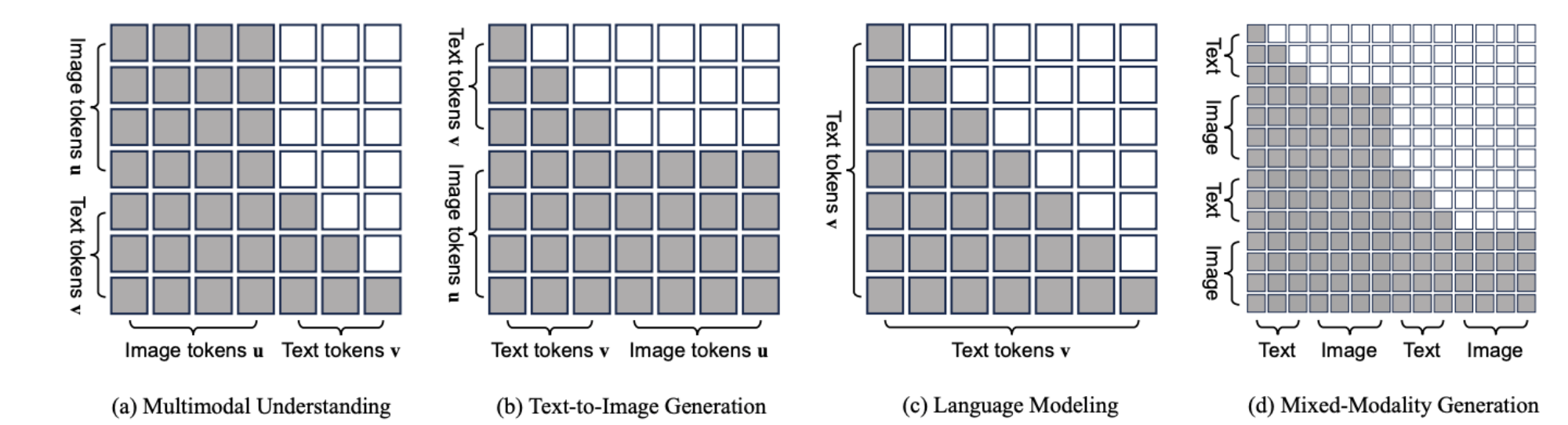
Base Model: Show-o Unified Transformer (Xie et al., 2024)
Approaches Tested
- Naive MoE: Creating experts by simply copying existing FFN weights.
- Dense-to-MoE (Smart Initialization): Using Taylor Scores to identify important neurons for specific tasks and grouping them into specialized experts (Text Experts, Image Experts, Shared Experts).
Training the Router
We used a GShard Gate with Top-2 selection. To encourage specialization, we employed:
- Load Balancing Loss: With a decaying coefficient ($\alpha \to 0$) to allow specialization after initial training.
- Softmax Temperature Annealing: Starting with high temperature for exploration and cooling down for exploitation.
3. Results
A. Token Separation (Text vs. Image)
We observed a distinct separation of experts handling text and image tokens. The visualizations below show the gating probability distributions for different layers.
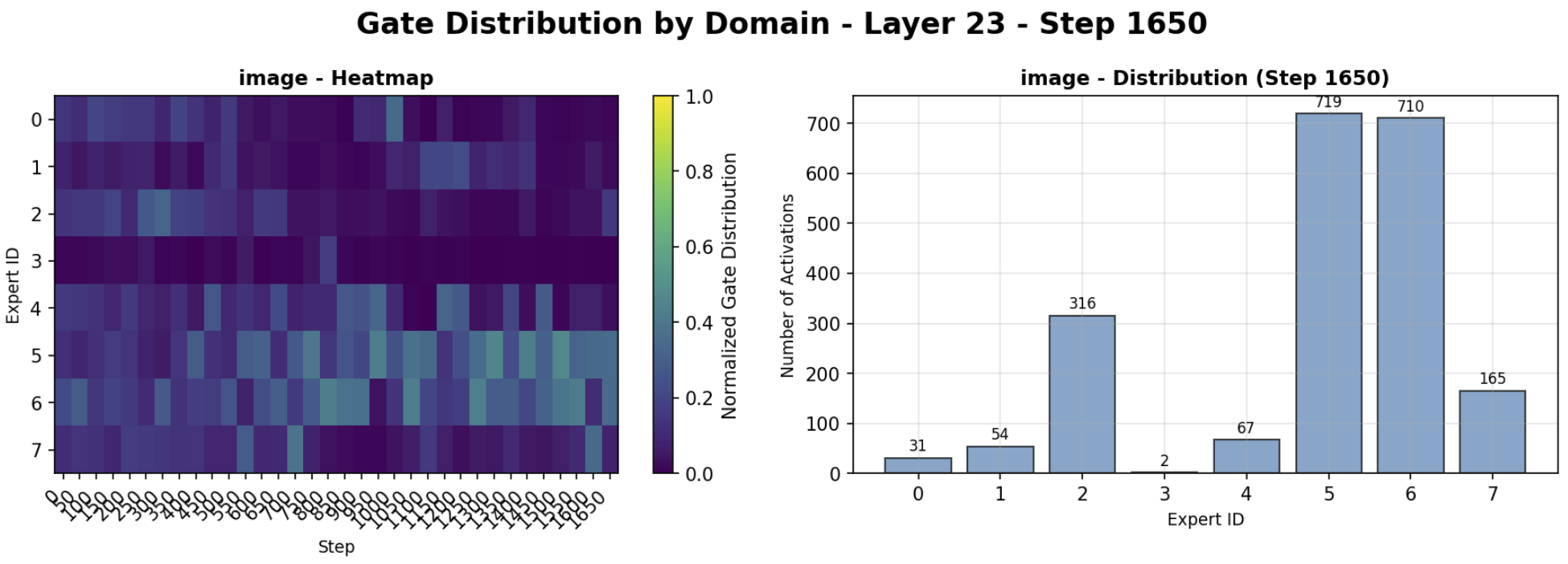
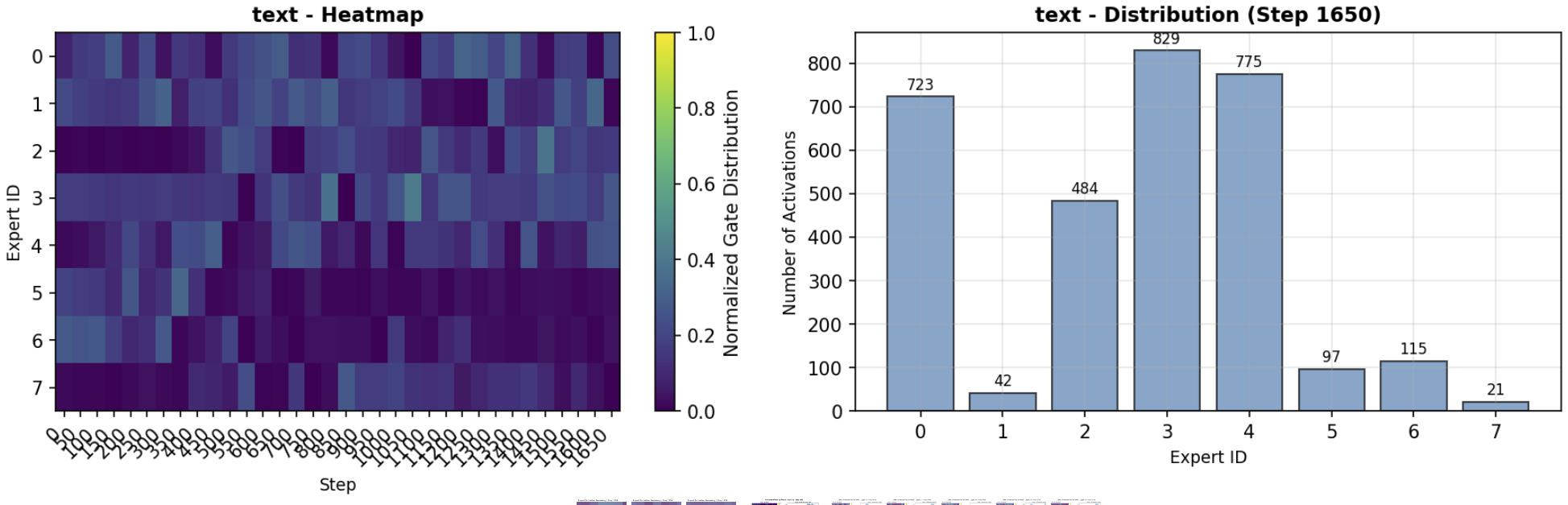
Separation of experts for text and image tokens.
B. Image Generation Quality (FID)
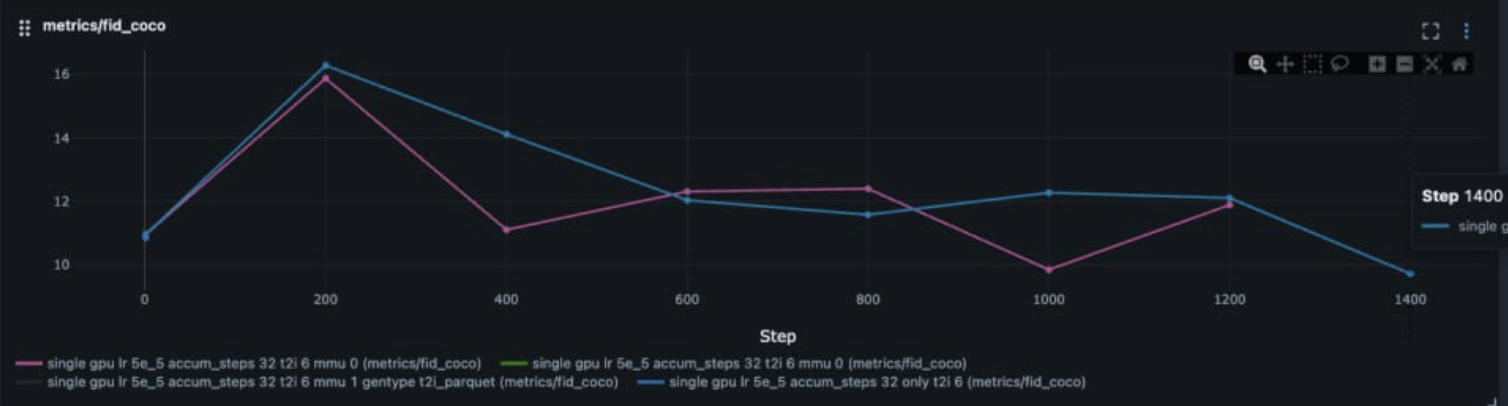
We compared the Fréchet Inception Distance (FID) of our MoE model against the baseline.
- Baseline: ~9.24
- MoE: ~20
While the FID score increased (indicating lower quality), the model successfully learned to route tokens, proving the concept of autonomous specialization.
C. Initialization with Taylor Scores (Dense-to-MoE)
We attempted to initialize experts by calculating the importance of neurons (Taylor Scores) for text and image tasks.
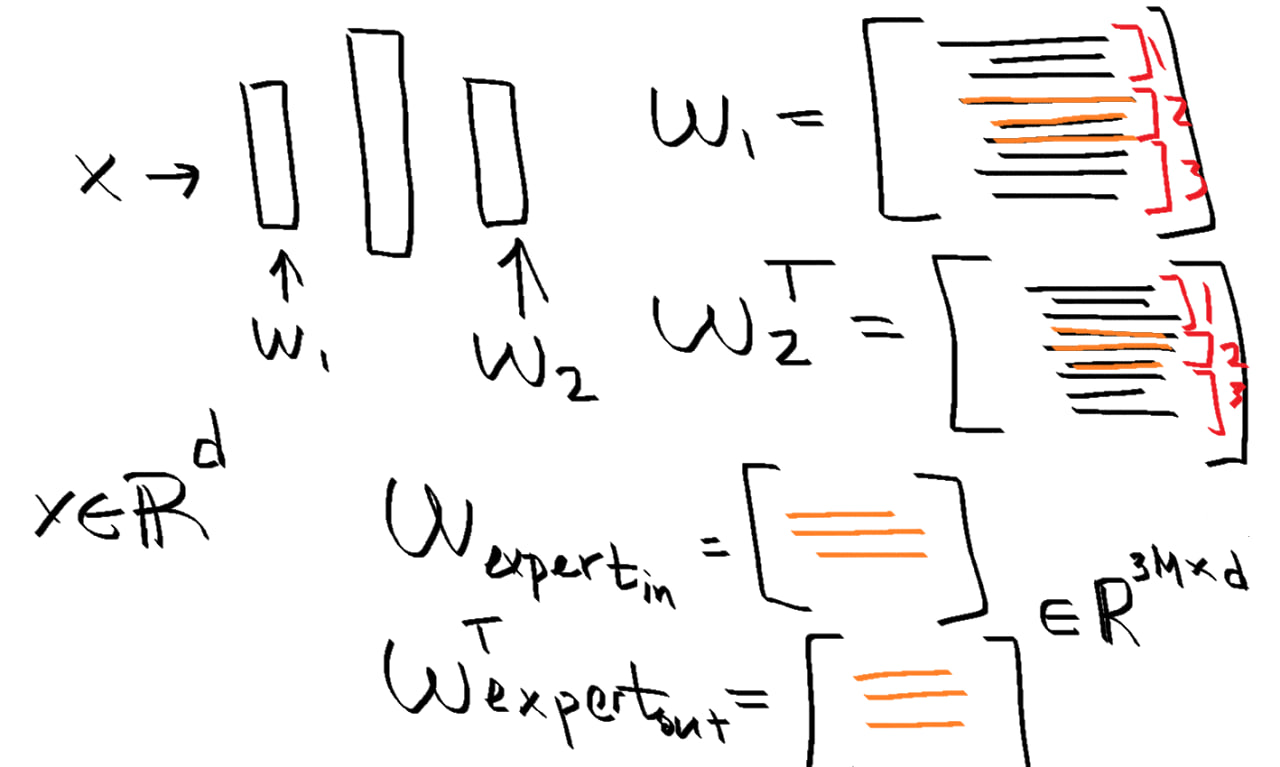
Extracting experts from segments based on importance scores.
Result: This initialization method improved the MMU Score from 62% to 65%.
4. Challenges & Unsuccessful Experiments
D. Data Domain Separation (Failed)
We hypothesized that the model would separate tokens based on their source dataset (Data Domain), creating specialized “domain experts.” To encourage this, we even introduced a Learnable Bias ($b_i(t)$) to the router, which we gradually annealed.
Outcome: Despite our efforts, the model failed to separate tokens by data domain. The gating distribution remained mixed across different datasets, suggesting that domain-level specialization is not as “natural” for the model as modality-level specialization (Text vs. Image).
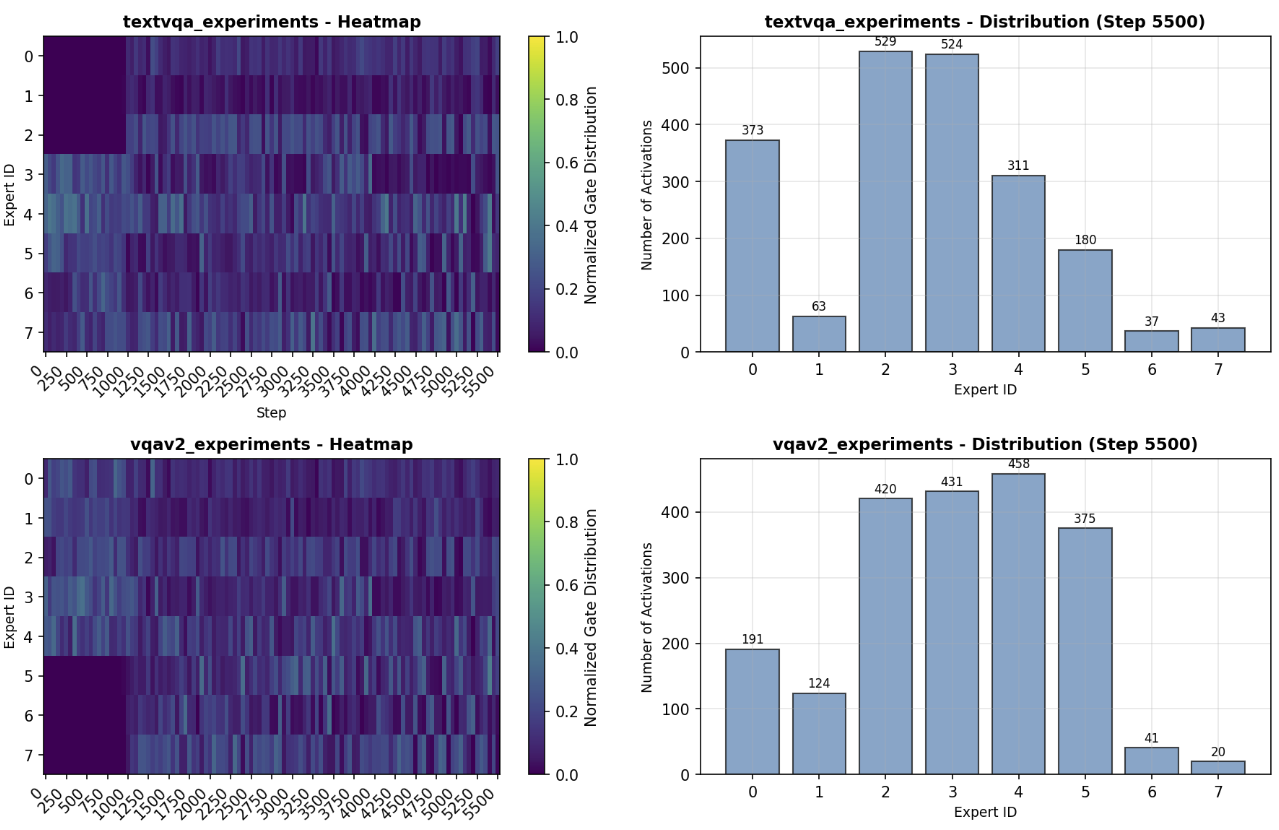
Gating distribution shows no clear separation by data domain.
E. Data Quality Issues
We encountered significant challenges with the quality of the training data, which likely impacted the model’s ability to learn fine-grained specializations. Issues included:
- Poor Captioning: Many images had irrelevant or generic captions.
- Artifacts: Presence of UI elements, watermarks, or corrupted data in the dataset.
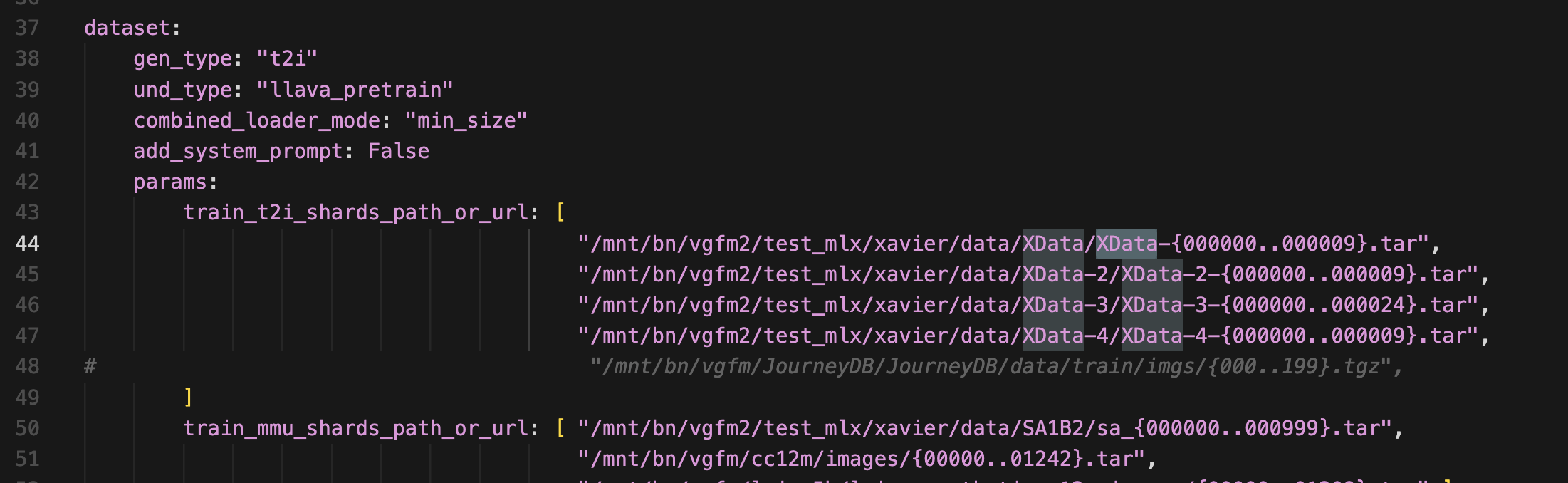

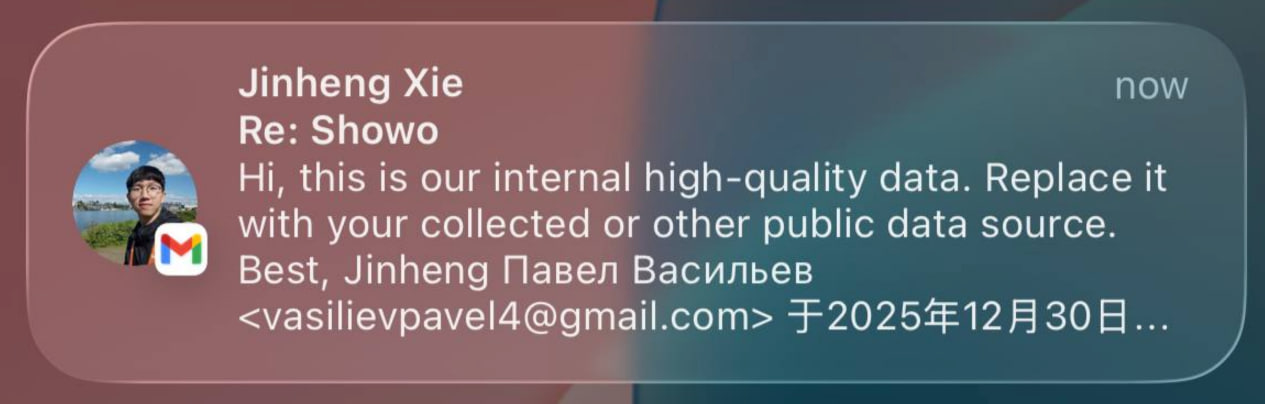
Examples of data quality issues encountered during research.
5. Conclusion & Future Work
We explored two approaches to scaling and specializing unified models:
- Scaling (Naive MoE): Increasing parameter count by copying FFNs. Validated on Text-to-Image (T2I).
- Efficiency (Dense-to-MoE): Maintaining parameter count by splitting FFNs. Improved Multimodal Understanding (MMU).
Future Plans:
- Use Sparse Autoencoders (SAE) to identify semantic features activated by different tokens.
- Construct experts based on these semantic features for better interpretability.
Powered by Jekyll and Minimal Light theme.